What Fruits Can Dogs Eat? 21 Vet-Approved Picks
As dog lovers, we often find ourselves sharing bites of our food with our furry friends. But not all human foods are safe for pets. A common question many dog owners ask is: what fruits can dogs eat? The answer is not as simple as handing over a slice of apple or tossing a grape. Some fruits are nutritional powerhouses for dogs, while others can be extremely toxic.
According to a 2024 survey by the American Pet Products Association (APPA), over 67% of U.S. households own a pet dog. Out of those, nearly 56% of owners admit to sharing human food with their pets at least once a week. This highlights why it’s so important to know which fruits are safe and which should be avoided.
By the end of this article, you’ll be well-equipped with the knowledge to give your furry friend safe, tasty, and health-boosting fruit snacks.

Why Fruits Can Be a Great Treat for Dogs
Dogs thrive on a balanced diet primarily consisting of protein and fat, but fruits can play a supplementary role:
- Nutritional Boost: Fruits provide vitamins, antioxidants, and minerals.
- Digestive Aid: Fiber from fruits like pears or apples helps with constipation.
- Hydration: Water-rich fruits such as watermelon prevent dehydration, especially in Florida’s hot climate.
- Weight Management: Fruits are low-fat and can replace calorie-dense dog treats.
⚠️ However, fruits should not exceed 10% of your dog’s daily calorie intake . Too much can upset their stomach and spike blood sugar levels.
21 Safe Fruits for Dogs (With Benefits & Serving Tips)
Let’s break down the best fruits dogs can safely enjoy, their benefits, and how to serve them.
1. Apples 🍎
- Benefits: Vitamin A, C, and dietary fiber.
- Serving Tip: Slice thin, remove seeds and core.
2. Blueberries 🫐
- Benefits: Antioxidants support brain and heart health.
- Serving Tip: Offer fresh or frozen for a crunchy snack.
3. Bananas 🍌
- Benefits: Potassium supports muscles and nerves.
- Serving Tip: Give in moderation due to sugar content.
4. Strawberries 🍓
- Benefits: Vitamin C + natural teeth-whitening enzyme (malic acid).
- Serving Tip: Wash thoroughly; chop into small pieces.
5. Watermelon 🍉
- Benefits: Hydration, vitamins A, B6, and C.
- Serving Tip: Remove rind and seeds.
6. Mango 🥭
- Benefits: Rich in vitamin A and beta-carotene for eye health.
- Serving Tip: Peel, remove pit, serve in cubes.
7. Pineapple 🍍
- Benefits: Bromelain aids protein digestion.
- Serving Tip: Fresh only, no canned (too much syrup).
8. Oranges 🍊
- Benefits: Vitamin C, fiber.
- Serving Tip: Peel and remove seeds.
9. Pears 🍐
- Benefits: Fiber-rich, may lower risk of stroke in dogs.
- Serving Tip: Core and deseed before serving.
10. Raspberries 🍇
- Benefits: Anti-inflammatory properties, good for aging dogs.
- Serving Tip: Limit—contain trace xylitol.
11. Blackberries
- Benefits: Vitamins A & K, antioxidants.
- Serving Tip: Mash into homemade dog biscuits.
12. Cranberries
- Benefits: Help prevent urinary tract infections.
- Serving Tip: Mix with other fruits to reduce tartness.
13. Peaches 🍑
- Benefits: High in vitamin A, supports skin health.
- Serving Tip: Remove pits, offer small slices.
14. Nectarines
- Benefits: Similar to peaches, but sweeter.
- Serving Tip: Slice thin, no pits.
15. Cantaloupe 🍈
- Benefits: Rich in beta-carotene, hydrating.
- Serving Tip: Small cubes only.
16. Kiwi 🥝
- Benefits: Vitamin C + potassium boost.
- Serving Tip: Peel skin, slice small.
17. Papaya
- Benefits: Enzymes aid digestion, rich in vitamins.
- Serving Tip: Peel, deseed, feed sparingly.
18. Coconut 🥥
- Benefits: Provides electrolytes, boosts immunity.
- Serving Tip: Fresh, unsweetened flakes only.
19. Dragon Fruit (Pitaya)
- Benefits: Antioxidants, fiber, hydration.
- Serving Tip: Peel outer skin, serve soft flesh.
20. Pomegranate (in moderation)
- Benefits: Antioxidants boost immunity.
- Serving Tip: Offer juice-soaked treats, avoid seeds (hard to digest).
21. Persimmons
- Benefits: Rich in beta-carotene and vitamin C.
- Serving Tip: Remove seeds and skin.
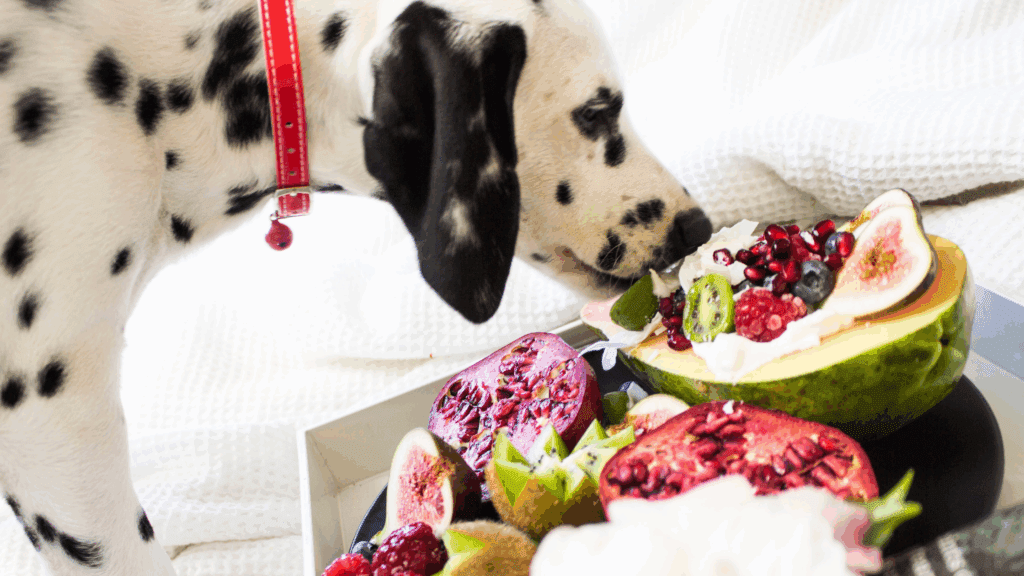
Fruits Dogs Should Avoid 🚫
Some fruits are dangerous and should never be fed to dogs.
| Unsafe Fruit | Why It’s Unsafe |
| Grapes & Raisins | Can cause kidney failure. |
| Cherries | Pits contain cyanide + choking hazard. |
| Avocados | Contain persin, toxic to dogs. |
| Lemons & Limes | High acidity causes upset stomach. |
| Figs | Can trigger vomiting and diarrhea. |
| Dates (dried) | Extremely high sugar, digestive upset. |
How to Safely Introduce Fruits to Dogs
- Start Small: Give a small bite and monitor for reactions.
- One at a Time: Introduce new fruits gradually to rule out allergies.
- Cut Into Pieces: Prevents choking.
- Avoid Peels, Seeds, Pits: Many contain toxins or are indigestible.
- Vet Consultation: Especially important for diabetic or senior dogs.
Fruits vs. Commercial Dog Treats: A Comparison
| Type | Calories (per 1 oz) | Nutritional Value | Best Use |
| Commercial Biscuit | 110 | Low vitamins, high carbs | Training treats |
| Apple Slices | 15 | Vitamins A, C, fiber | Everyday snack |
| Blueberries | 20 | Antioxidants, fiber | Summer snack |
| Banana | 25 | Potassium, magnesium | Energy booster |
This comparison shows why fruits make excellent low-calorie alternatives.
Health Benefits of Feeding Fruits to Dogs
1. Boosts Immune System
Vitamin-rich fruits like oranges and apples strengthen immunity.
2. Improves Digestion
High-fiber fruits like pears help regulate bowel movements.
3. Hydration Support
Fruits like watermelon and cantaloupe keep dogs cool and hydrated.
4. Anti-Aging Properties
Antioxidants in blueberries and blackberries combat free radicals.
5. Weight Control
Low-calorie fruits help overweight dogs shed pounds safely.
Expert Insights & Statistics
- According to Pet Obesity Prevention Association (2022), over 59% of U.S. dogs are overweight or obese. Replacing high-calorie treats with fruits can help manage weight.
- The AKC nutrition report (2023) notes that antioxidants in blueberries may help delay cognitive decline in senior dogs.
Conclusion
So, what fruits can dogs eat? The list is longer than most people expect—apples, bananas, blueberries, watermelon, pears, and even tropical fruits like mango and papaya can be safe and beneficial. These fruits can help boost immunity, improve digestion, and provide hydration—all while keeping calories low.
But remember: moderation is key. Not all fruits are safe (like grapes or cherries), and even safe fruits should be fed in small amounts. Think of fruits as an occasional treat, not a replacement for balanced dog food.
By following vet-approved guidelines and being cautious, you can ensure your furry friend enjoys the sweetness of nature without any health risks.
FAQs
1. Can dogs eat grapes?
No. Grapes and raisins are toxic and may cause kidney failure.
2. How much fruit can dogs eat daily?
No more than 10% of their daily diet.
3. Are bananas safe for diabetic dogs?
Only in tiny amounts, as they’re high in sugar. Always consult your vet first.
4. Can puppies eat fruit?
Yes, but introduce gradually and cut into tiny pieces to avoid choking.
5. What fruits improve dog digestion?
Apples, pears, and pumpkin are best for fiber and gut health.
