How Often Should You Schedule Mobile Dog Grooming?
Most dogs benefit from professional mobile grooming every four to eight weeks, but there is no single schedule that fits every dog. Coat type, haircut length, shedding, activity level, skin health, age, and home maintenance all affect the right interval. A short-coated dog may need a complete appointment every eight to twelve weeks, while a curly or continuously growing coat often needs attention every four to six weeks.
The best approach is to begin with a practical schedule, monitor your dog’s coat and comfort, and adjust the timing with your groomer. Mobile appointments make it easier to keep that routine because the groomer comes to your home and your dog avoids travel and a busy salon environment.
Quick Mobile Dog Grooming Schedule by Coat Type
The following intervals are useful planning ranges—not medical rules. Your groomer may recommend a different schedule after seeing your dog’s coat, skin, nails, and preferred haircut.
| Coat or grooming need | Typical professional schedule | Between-visit care |
|---|---|---|
| Short, smooth coat | Every 8–12 weeks | Weekly brushing and regular nail checks |
| Short, dense or double coat | Every 6–8 weeks | Weekly brushing; more often during shedding seasons |
| Curly or continuously growing coat | Every 4–6 weeks | Frequent brushing and combing to prevent mats |
| Long or silky coat | Every 4–6 weeks | Brush several times per week, including friction areas |
| Wire coat | Every 6–8 weeks | Regular brushing; discuss clipping or hand-stripping needs |
| Senior, anxious, or special-needs dog | Individual plan | Short, gentle handling sessions based on comfort |
The American Kennel Club explains that grooming frequency depends on coat type, length, and shedding pattern. That is why a breed name alone cannot determine the perfect interval.
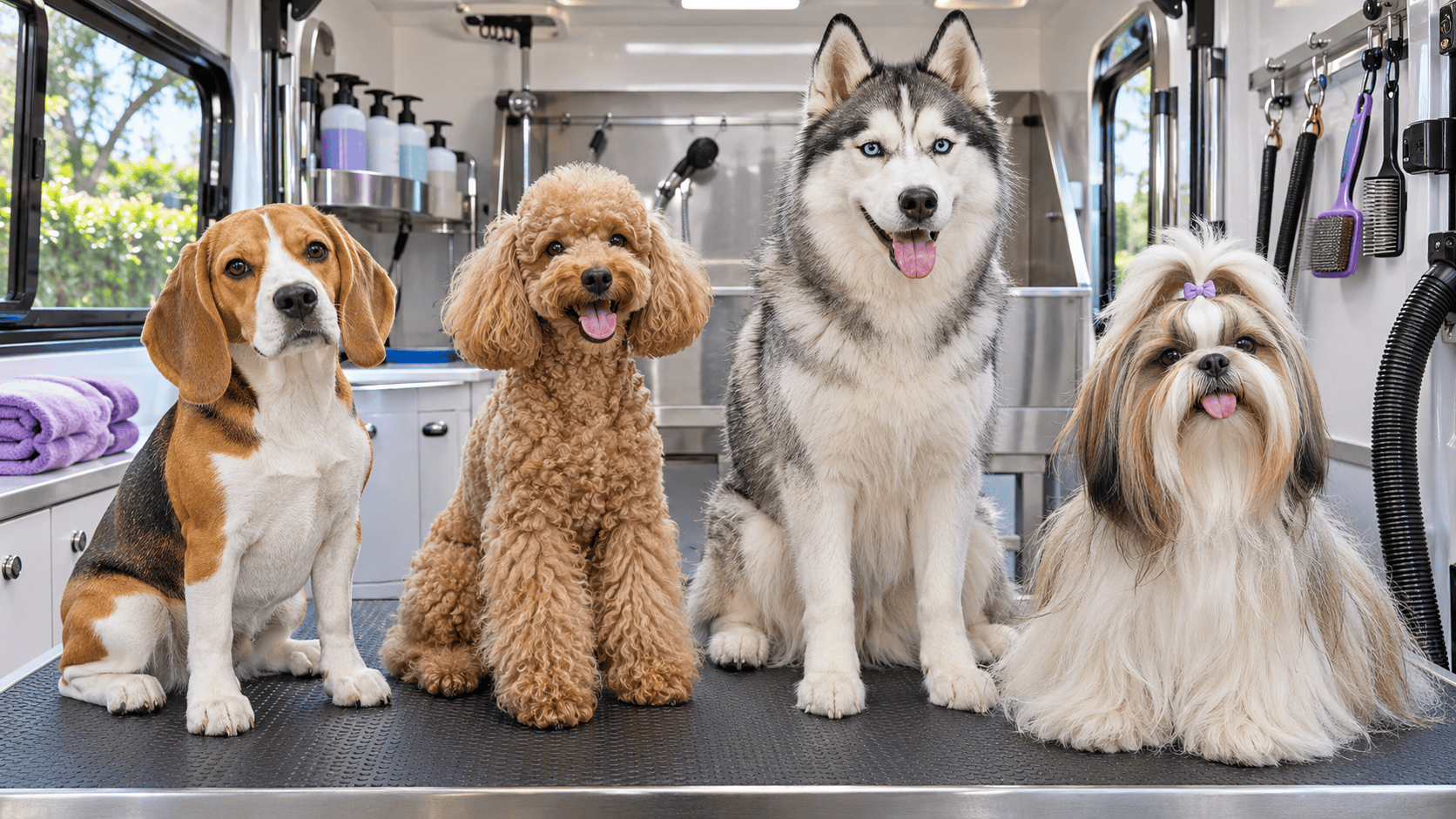
How Often Should Short-Haired Dogs Be Groomed?
Many healthy short-haired dogs can schedule a full professional groom every eight to twelve weeks. They may not need haircuts, but bathing, de-shedding, nail trimming, ear checks, and coat care still matter. Dogs that spend more time outdoors, swim frequently, shed heavily, or develop noticeable odor may benefit from shorter intervals.
Home care remains important. The ASPCA recommends regular brushing and notes that the right frequency depends largely on coat type. Our guide to grooming short-haired dogs provides more detailed maintenance advice.
How Often Do Curly and Continuously Growing Coats Need Grooming?
Poodles, doodle-type coats, bichons, and other continuously growing or curly coats commonly need professional grooming every four to six weeks. Waiting too long can make brushing more difficult and allow tangles to become tight mats, especially around the ears, legs, collar, armpits, and tail.
If you prefer a longer haircut, you may need a shorter appointment interval and more thorough brushing at home. A shorter, practical trim can sometimes make a slightly longer interval manageable, but your groomer should evaluate the coat before recommending it.
How Often Should Double-Coated Dogs Be Groomed?
Retrievers, huskies, shepherds, and other double-coated dogs often benefit from professional grooming every six to eight weeks. During seasonal coat changes, more frequent de-shedding appointments may help remove loose undercoat before it compacts.
Double coats generally should not be shaved simply to reduce shedding unless a veterinarian or qualified professional identifies a specific reason. Instead, use appropriate brushing, bathing, drying, and de-shedding techniques. Our dog-shedding guide explains how consistent coat care can help at home.
What Can Make a Dog Need Grooming More Often?
Lifestyle and activity
Dogs that swim, visit beaches, hike, play in wet grass, or spend significant time outdoors can collect sand, debris, moisture, and tangles. An active dog may need more frequent brushing and occasional earlier appointments even if the coat is normally low maintenance.
Florida heat and humidity
South Florida’s warm, humid conditions can make moisture and debris management especially important. The solution is not automatically a very short haircut; it is a routine suited to the dog’s coat and skin. See our guide to humidity, pet fur, and skin for local considerations.
Age, mobility, and anxiety
Puppies benefit from early, positive introductions to grooming. Senior dogs or dogs with mobility limitations may do better with shorter, more frequent visits instead of long sessions. Anxious dogs may also benefit from a predictable routine and a private appointment. Learn more about mobile grooming for anxious dogs.
Skin or medical concerns
If your dog has allergies, sores, persistent itching, unusual odor, hair loss, or a diagnosed skin condition, ask your veterinarian before changing bathing frequency or products. Grooming can support hygiene, but it does not replace veterinary diagnosis or treatment.
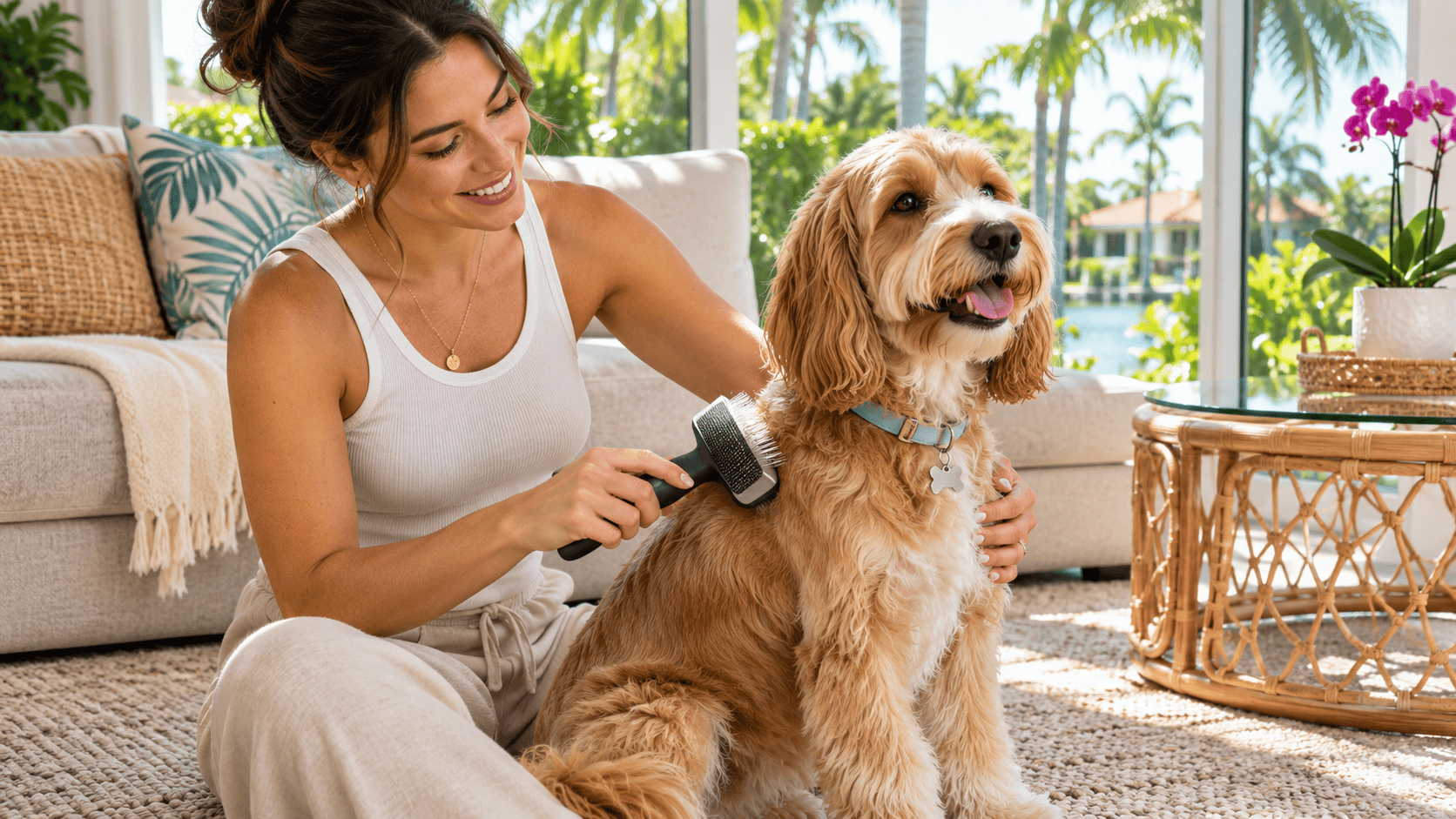
Signs Your Dog’s Next Appointment Should Be Sooner
- The coat is tangling faster than you can comfortably brush it.
- Nails are clicking on hard floors or affecting normal footing.
- Loose undercoat is building up despite regular brushing.
- The dog has persistent odor after ordinary home care.
- Hair around the eyes, paws, or sanitary areas is becoming difficult to manage.
- Your dog is uncomfortable when you touch or brush certain areas.
If you notice redness, swelling, discharge, pain, open sores, or a sudden change in coat or skin, contact a veterinarian rather than waiting for the next grooming appointment.
How to Maintain the Coat Between Mobile Grooming Visits
A consistent home routine can keep the coat comfortable and help professional appointments go more smoothly:
- Use a brush and comb appropriate for your dog’s coat.
- Check behind the ears, beneath the collar, under the legs, and around the tail for early tangles.
- Keep paws clean and dry after wet walks or outdoor play.
- Check nails regularly instead of waiting for them to become overgrown.
- Follow your groomer’s product and brushing recommendations.
- Do not cut tight mats with scissors because skin can be pulled into the mat.
Our guide on preparing your dog for a grooming appointment can help you make each visit calmer and more efficient.
Why a Recurring Mobile Grooming Schedule Helps
Booking the next appointment before the groomer leaves gives your dog a more predictable routine and reduces the chance of waiting until the coat becomes difficult to manage. It also makes it easier to reserve a preferred time and plan around seasonal shedding, vacations, or special events.
Mobile grooming can be especially convenient for busy households, multi-pet families, senior owners, and dogs that dislike car rides. Compare the available mobile grooming services and review grooming packages and prices before choosing the schedule that fits your dog.
Frequently Asked Questions
Is grooming every four weeks too often?
Not necessarily. A four-week schedule can be appropriate for continuously growing coats, longer styles, skin-care plans recommended by a veterinarian, or dogs that benefit from shorter appointments. Products and services should be chosen for the individual dog.
Can a short-haired dog go several months without professional grooming?
Some short-haired dogs can space full appointments eight to twelve weeks apart when owners maintain brushing, nails, ears, and hygiene at home. Heavy shedding, odor, outdoor activity, or nail growth may require earlier care.
Should I schedule grooming before my dog looks overgrown?
Yes. Preventive scheduling is usually easier and more comfortable than waiting for significant matting, overgrown nails, or hygiene problems. Ask your groomer to recommend the next date based on the coat after each appointment.
Does mobile grooming take less time than salon grooming?
A mobile appointment usually serves one household at a time and avoids salon drop-off and waiting periods. Actual grooming time still depends on size, coat condition, services, and behavior.
How do I choose my dog’s first mobile grooming interval?
Start with the coat-type range in this guide, then share your dog’s breed, weight, age, haircut preference, last grooming date, skin concerns, and behavior with the groomer. Adjust future appointments based on how the coat changes between visits.
Build a Schedule Around Your Dog
A four-to-eight-week mobile grooming schedule works for many dogs, but the right answer depends on the individual pet. Coat type gives you a starting point; lifestyle, health, home care, and haircut preferences determine the final routine. Regular appointments can prevent coat problems, support comfortable nails and hygiene, and create a familiar process for your dog.
Purrfect Grooming provides professional mobile dog grooming throughout supported South Florida communities, including Miami and Fort Lauderdale.
