How Long Does a Cat Stay in Heat? Vet-Approved Tips & Timeline
If your cat is suddenly loud, affectionate, and restless, you might wonder, “What’s going on?” She’s probably in heat. When a cat goes into heat, she’s ready to mate and is actively looking for a male cat (called a tom). This behavior can be intense and surprising for new cat owners.
👉 Here’s a shocking stat: A female cat can become pregnant up to 3 times a year and deliver 4–6 kittens per litter, according to ASPCA data. That’s why understanding her cycle is so important.
This guide will help you recognize the signs, understand how long a cat stays in heat, and learn how to keep her comfortable.

Understanding the Cat Heat Cycle
A female cat, also known as a queen, experiences a reproductive cycle called estrus. This cycle is influenced by sunlight, age, hormones, and environment.
What Triggers Heat in Cats?
Cats are seasonally polyestrous, which means they go into heat multiple times during the breeding season — usually spring to fall. Longer daylight hours tell their bodies it’s time to reproduce.
Queen vs. Male Cat Behavior
When queens go into heat:
- They become super vocal
- Rub against people and furniture constantly
- Raise their hindquarters when touched
Toms become more aggressive and may roam miles to find a mate.
How Long Does a Cat Stay in Heat?
Most cats stay in heat for 4 to 10 days. During this time, they will show intense signs of being ready to mate. If mating doesn’t occur, the cycle repeats after a short break.
Owners often ask: Does the cycle change for indoor vs. outdoor cats?
Indoor Cats
- More heat cycles throughout the year
- Because of indoor lighting mimicking long daylight hours
Outdoor Cats
- Fewer cycles
- Mostly during spring/summer
Keyword Placement ✔️
Stages of the Feline Estrus Cycle
Cats have a unique cycle that repeats until pregnancy or spaying occurs.
1️⃣ Proestrus
- Lasts 1–2 days
- Slight attention-seeking behavior
- Not yet receptive to males
2️⃣ Estrus
- The actual “heat” stage
- Lasts 4–10 days
- This is when mating can happen
3️⃣ Interestrus
- Only occurs if she doesn’t mate
- Short break of 2–3 weeks before the next heat
Heat Cycle Overview Table
| Stage | Duration | Mating Possible? | Typical Behavior |
| Proestrus | 1–2 days | ❌ | Mild affection |
| Estrus | 4–10 days | ✔️ | Loud meowing, rolling, spraying |
| Interestrus | 2–3 weeks | ❌ | Calm returns |
Heat Cycle Frequency
Cats can go into heat every 2–3 weeks until they become pregnant or spayed. That’s pretty often!
Seasonal Effects
Breeding season usually occurs when days are longer (spring & summer).
Breed Differences
Siamese and Oriental breeds may enter heat more frequently than others.
You May Also Like : How To Discipline A Cat?
Signs a Cat Is in Heat
Here’s what you’ll notice:
- Loud yowling and constant vocalizing
- Rubbing against objects or you
- Decreased appetite
- Restlessness and anxious pacing
- Tail raised, back legs “treading”
- Spraying strong-smelling urine
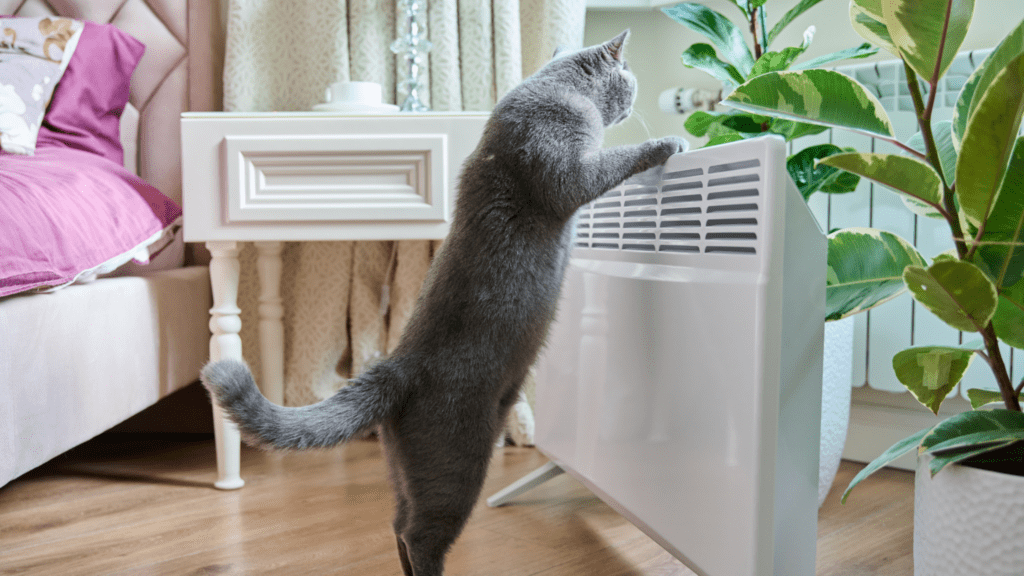
Heat behavior can be mistaken for pain, but it’s completely normal.
Can Cats Get Pregnant Anytime During Heat?
Yes! Cats ovulate during mating, meaning even one encounter with a male can result in pregnancy.
📌 Stat: According to Humane Society data, a single unspayed cat and her offspring can produce up to 420,000 kittens in 7 years (theoretical calculation).
That’s a huge impact on stray populations.
How to Help a Cat in Heat
While you can’t stop the cycle without a vet’s help, you can comfort her:
- Provide extra attention and gentle play
- Use calming pheromone diffusers (like Feliway)
- Keep tomcats far away
- Offer warm blankets or heating pads
- Distract her with treats and toys
Avoid letting her outside — it’s the easiest path to pregnancy.
Medical Ways to Stop Heat
The best long-term solution is spaying.
Benefits of Spaying
- Prevents heat cycles permanently
- Eliminates pregnancy risk
- Reduces chance of mammary cancer and pyometra
- Keeps her calmer and healthier
Emergency Options
A vet may provide temporary hormone treatments if spaying must be delayed, but these can carry health risks.
For professional guidance, visit reputable veterinary resources like the Cornell Feline Health Center. (placeholder citation — replace with correct external link if needed)
Risks of Repeated Heat Cycles
Leaving a cat unspayed long-term may lead to:
- Pyometra (deadly uterus infection)
- Hormonal stress
- Malnutrition from frequent pregnancies
- Depression if unable to mate
Heat cycles aren’t just annoying — they can be dangerous.
Indoor vs. Outdoor Cat Pregnancy Risk
Indoor cats may seem safer, but:
- Open windows, screens, and quick escapes happen
- Male cats are determined escape artists during breeding season
Outdoor cats face even more risks:
- Disease from mating
- Injuries from fights
- Getting lost or pregnant multiple times
Keep her securely indoors until spayed.
Conclusion
Knowing how long does a cat stay in heat helps you care for your furry friend more effectively. Her cycle can last 4–10 days and repeat every few weeks, which can be stressful for both of you. The most responsible and loving choice is often to spay your cat — it keeps her healthier and prevents surprise litters.
If your cat is showing strong heat symptoms, stay patient, keep her safe indoors, and talk with your vet about long-term options. Your queen deserves to feel comfortable and cared for every step of the way.
FAQs
1. How often do cats go into heat?
Every 2–3 weeks during breeding seasons or year-round for indoor cats.
2. At what age does a cat first go into heat?
As early as 4–6 months old.
3. How long does a cat stay in heat the first time?
Typically 4–7 days, but it varies by cat.
4. Should I let my cat mate before spaying?
No. There’s no health benefit to having a litter first.
5. Do cats bleed during heat?
Not typically. If you see blood, contact a veterinarian.
