Do Dogs Smile? The Science Behind That Happy Grin
If you’ve ever looked at your dog’s face and seen that adorable grin, you’ve probably wondered — do dogs smile because they’re happy, or is it just our imagination? The question might sound simple, but the answer lies deep in science, emotion, and evolution. According to a 2023 survey by the American Kennel Club, 89% of dog owners believe their dogs smile when they’re happy, showing just how strongly people associate a dog’s expression with joy. Another study from the Journal of Comparative Psychology found that dogs can mimic human facial expressions within 1.5 seconds — an ability that plays a key role in how they communicate affection.
Dogs are emotional beings. They bond with humans through eye contact, tone, and expression. So, that grin you see may very well be your dog’s way of saying, “I love you.” Let’s dig deeper into what really goes on when your furry friend flashes those pearly whites.
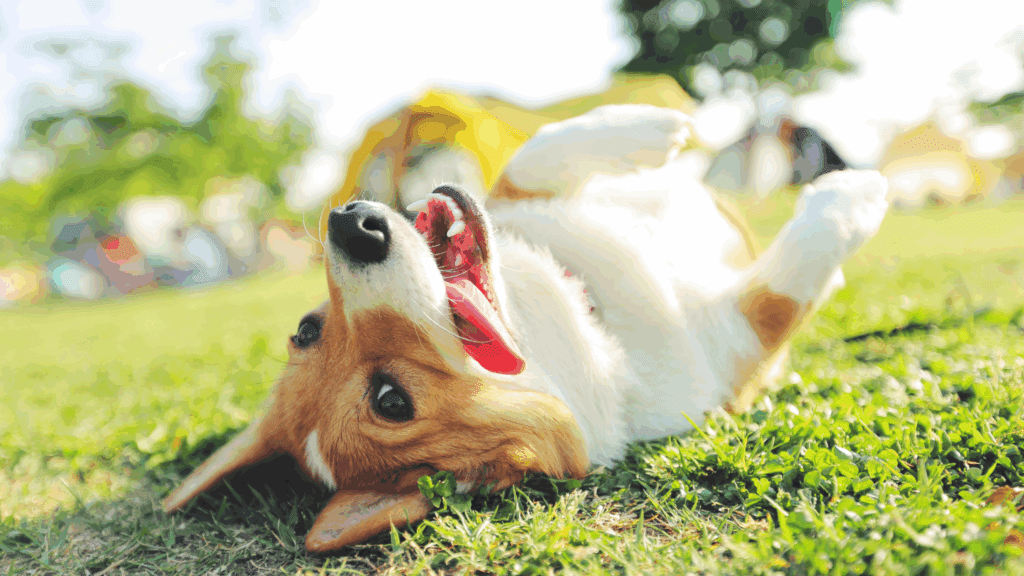
The Science Behind a Dog’s Smile
Understanding Canine Facial Muscles
Unlike humans, dogs don’t have the same muscle configuration that allows us to smile consciously. However, they do have over 30 facial muscles, which help them express a wide range of emotions — from joy to curiosity to submission. The zygomaticus major muscle, the same one responsible for human smiles, also plays a part in a dog’s open-mouth “smile.” When relaxed and at ease, the corners of a dog’s mouth naturally turn upward, giving them that classic happy look.
Behaviorists note that these muscle movements are not random. Dogs use them to communicate. For example, a soft, open mouth paired with bright eyes and relaxed ears often indicates a state of calm happiness.
The Role of Evolution and Domestication
Dogs have evolved alongside humans for more than 15,000 years, which has made them masters at interpreting — and mimicking — human behavior. This co-evolution is why dogs often mirror our emotions. If you’re smiling and speaking in a happy tone, your dog is likely to “smile” back, both to bond with you and to show that they’re comfortable. Researchers call this emotional contagion, a process through which dogs absorb and reflect our emotions.
Do Dogs Smile Out of Happiness or Mimicry?
This is one of the biggest debates among canine experts. Do dogs genuinely smile because they feel joy, or are they mimicking human expressions for social bonding?
Emotional Response vs. Learned Behavior
Many scientists believe it’s a combination of both. When a dog smiles, it’s often triggered by emotional satisfaction — being petted, praised, or simply spending time with their owner. Over time, dogs learn that smiling and relaxed expressions elicit positive reactions from humans, like affection or treats. That positive reinforcement strengthens the behavior.
Scientific Insight
In a 2018 study published in Scientific Reports, researchers found that dogs can synchronize their facial expressions with human emotions in less than two seconds, a behavior rarely seen in other animals. This means that when you smile, your dog likely “smiles” too — not as a fake gesture, but as a way to share your emotion.
Different Types of Dog Smiles
Just like humans have different kinds of smiles — genuine, nervous, polite — dogs also express various “smiles” that mean different things.
1. Relaxed Open-Mouth Smile
This is the most genuine form of a dog’s smile. The mouth is open, tongue lolling, and eyes soft. You’ll usually see it when your dog is playing, lounging in the sun, or just enjoying your company.
2. Submissive Smile
This expression can confuse people. When a dog shows their teeth but their body language remains relaxed — ears back, tail wagging low — they’re being submissive, not aggressive. It’s their way of saying, “I respect you.”
3. Playful Smile
A playful grin is often accompanied by wagging tails, bouncy movements, and happy vocalizations. Dogs use it during social interactions with humans or other dogs to indicate friendliness and excitement.
| Type of Smile | Visual Cue | Emotional Meaning | Common Situation |
| Relaxed Smile | Open mouth, soft eyes | Contentment | During rest or affection |
| Submissive Smile | Lips back, low tail | Deference | Greeting owner |
| Playful Smile | Tongue out, bright eyes | Excitement | During games or walks |
How Humans Influence Dog Smiling Behavior
Dogs are incredibly attuned to human emotions. Studies show that dogs pay more attention to human faces than any other animal, even wolves. This is partly why dogs tend to smile more when interacting with their owners.
When you smile and speak warmly, your dog associates that tone and facial cue with positivity. Over time, they begin to link their own “smile” with joy and safety. It’s a mutual feedback loop of affection and emotion.
Do Dogs Understand When They’re Smiling?
Dogs don’t possess self-awareness in the same way humans do, so they don’t “know” they’re smiling. However, they do understand that certain expressions lead to positive outcomes. When they smile and receive praise, belly rubs, or treats, they associate the act with happiness and continue to repeat it.
This learning process is known as operant conditioning — a form of learning discovered by psychologist B.F. Skinner, where behavior is influenced by consequences. Essentially, your dog learns that smiling makes you happy, and your happiness makes them happy too.
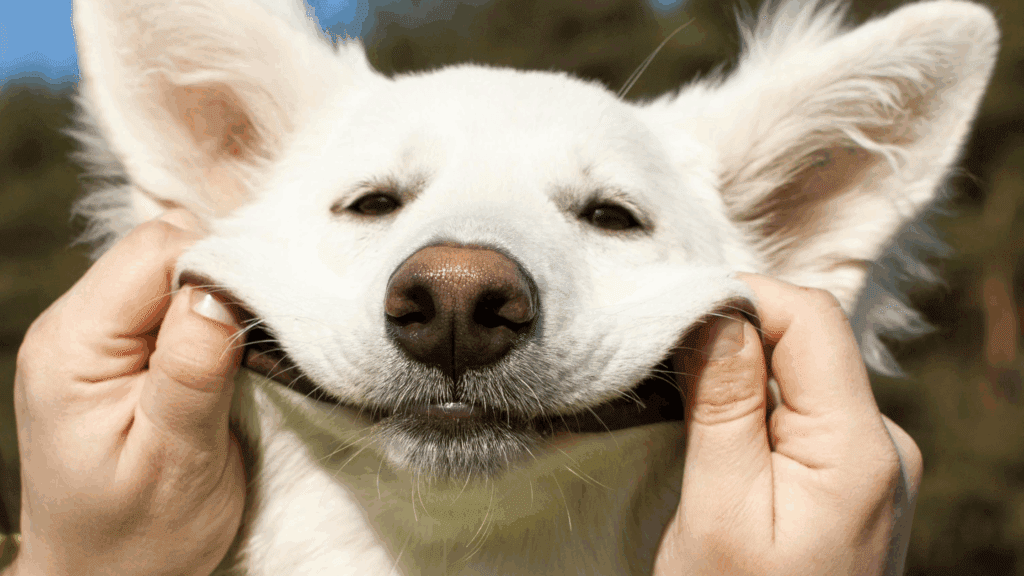
Body Language: How to Tell if It’s a Real Smile
Understanding the difference between a happy expression and a stress signal is crucial.
Tail Wagging and Ear Position
A genuine smile often comes with a loose, mid-level tail wag and relaxed ears. If your dog’s ears are pinned back or the tail is stiff, they may be anxious or uncertain.
Eye Contact and Posture
Dogs that smile out of joy will maintain gentle eye contact and display a soft, relaxed body posture. Dilated pupils, panting, or tense muscles can indicate stress rather than happiness.
| Behavior Cue | Emotional Indicator |
| Relaxed tail wag | Happiness |
| Soft eyes | Trust and affection |
| Relaxed ears | Calmness |
| Open mouth | Comfort |
Emotional Intelligence in Dogs
Dogs are considered one of the most emotionally intelligent animals on Earth. They can interpret tone, gesture, and even subtle facial changes in humans. According to research from the University of Helsinki, dogs can distinguish between happy and angry human faces with 80% accuracy. This deep emotional awareness is why your dog comes to comfort you when you’re sad — and smiles when you’re happy.
Scientific Studies on Dog Emotions
Dogs experience a range of emotions similar to a two-year-old human child. They feel happiness, fear, anger, and affection. A 2021 study published in Current Biology revealed that dogs release oxytocin, the “love hormone,” when they interact with their owners — the same chemical that bonds mothers to their babies.
These emotional responses explain why smiling and physical affection are so powerful in strengthening the human-dog relationship.
Can Dogs Use Smiling to Communicate With Humans?
Yes, absolutely. Dogs smile to show friendliness, ease tension, and initiate social bonding. A relaxed smile is a non-verbal way of saying, “I’m comfortable with you.” In multi-dog households, smiling can also prevent conflicts, signaling submission or peace.
Interestingly, therapy dogs often exhibit this “social smile” during human interaction, helping comfort people in hospitals and schools.
How to Encourage Your Dog to Smile More
- Positive Reinforcement – Praise and reward your dog whenever they display a happy expression.
- Play and Exercise – Physical activity releases endorphins, boosting mood and expressiveness.
- Affection and Attention – Regular petting, talking, and eye contact increase trust and joy.
- Routine and Security – A predictable routine helps your dog feel safe, leading to more natural smiles.
| Tip | How It Helps |
| Regular Playtime | Enhances emotional health |
| Positive Reinforcement | Encourages smiling behavior |
| Consistent Routine | Builds trust and safety |
| Verbal Praise | Strengthens emotional connection |
Common Misinterpretations of Dog Facial Expressions
People often confuse panting or snarling for smiling. While panting with a relaxed body usually indicates comfort, panting with a tense face might mean stress or overheating. Similarly, a lip curl with tense eyes and a stiff posture signals aggression, not friendliness. Always assess the entire body language, not just the mouth.
Do Different Breeds Smile Differently?
Yes! Some breeds are naturally more expressive. Retrievers, Spaniels, and Terriers often have wide mouths and flexible lips, making their smiles obvious. Breeds like Pugs or Bulldogs, however, may seem less expressive due to their shorter muzzles. Nevertheless, every dog — regardless of breed — expresses joy in its own way.
Myth vs. Fact: Do Dogs Actually Feel Joy When They Smile?
| Myth | Fact |
| Dogs only mimic human smiles | Dogs genuinely express joy through relaxed facial cues |
| Showing teeth always means aggression | It can mean submission or friendliness |
| Only some breeds can smile | All dogs can, though it’s more visible in some |
| Dogs don’t feel complex emotions | Science proves they experience love and happiness |
Do Dogs Smile in Their Sleep?
Ever noticed your pup twitching, wagging, or “grinning” in their sleep? That’s because dogs dream too. Studies from MIT suggest that dogs process emotional memories during REM sleep, which could trigger facial expressions similar to smiling — possibly reliving happy moments like playtime or cuddles.
Can Puppies Smile?
Yes! Puppies begin expressing joy through facial cues as early as 6 weeks old. Their early “smiles” often occur during play or bonding with their littermates and owners. Over time, as they grow and learn human interactions, these smiles become more expressive and recognizable.
Do Dogs Smile When They’re Guilty or Embarrassed?
That “guilty grin” you see when your dog chews your favorite shoe isn’t guilt — it’s submission. Dogs don’t feel guilt the way humans do; they react to your tone and body language. Their “smile” in that situation is an appeasement gesture meant to defuse your anger.
Can Dogs Smile on Command?
Yes — some dogs can learn to “smile” on command! By pairing a verbal cue like “smile” with treats or affection, dogs can be trained to raise their lips slightly. However, make sure training is gentle and positive — never force expressions.
Conclusion – The Real Meaning Behind a Dog’s Smile
So, do dogs smile like humans? In their own way — absolutely! Dogs smile not out of habit or imitation but from genuine emotion and connection. Their smiles reflect joy, comfort, trust, and love. It’s their way of communicating, “I’m happy, and I’m happy with you.”
Every wag, every grin, and every soft gaze is a reminder of the deep emotional bond we share with our canine friends. The next time your dog flashes that heartwarming smile, smile back — they’re speaking your language more than you realize.
FAQs
1. Do dogs smile intentionally?
Not consciously, but they understand that smiling and being relaxed bring positive reactions from humans.
2. Can dogs fake a smile?
Dogs can mimic human smiles as a learned behavior, but they don’t fake them with deceptive intent.
3. What does it mean if my dog shows teeth?
If their body is relaxed, it’s a submissive or friendly gesture. If tense, it could indicate aggression.
4. Do dogs smile when they’re guilty?
That “guilty” look is actually submissive body language, not true guilt.
5. Are dog smiles the same as human smiles?
Not exactly, but they serve similar emotional purposes — showing friendliness and joy.
