Why Do Cats Have Whiskers? Amazing Facts Backed by Science
Have you ever caught yourself staring at your cat’s whiskers and wondering what makes them so important? Most pet parents see whiskers as adorable accents on their cat’s face, but the truth is, whiskers are far more functional than they look. These fine yet powerful hairs serve as nature’s built-in radar system for cats. In fact, according to the American Veterinary Medical Association, whiskers are embedded with up to 200,000 sensory receptors, making them one of the most sensitive features on a cat’s body (source). That means every little twitch or movement in the air is detected instantly by your feline friend.
In this article, we’ll explore not just why do cats have whiskers, but also uncover the hidden science, survival strategies, and quirky facts that make them such an extraordinary feature of your pet’s anatomy.
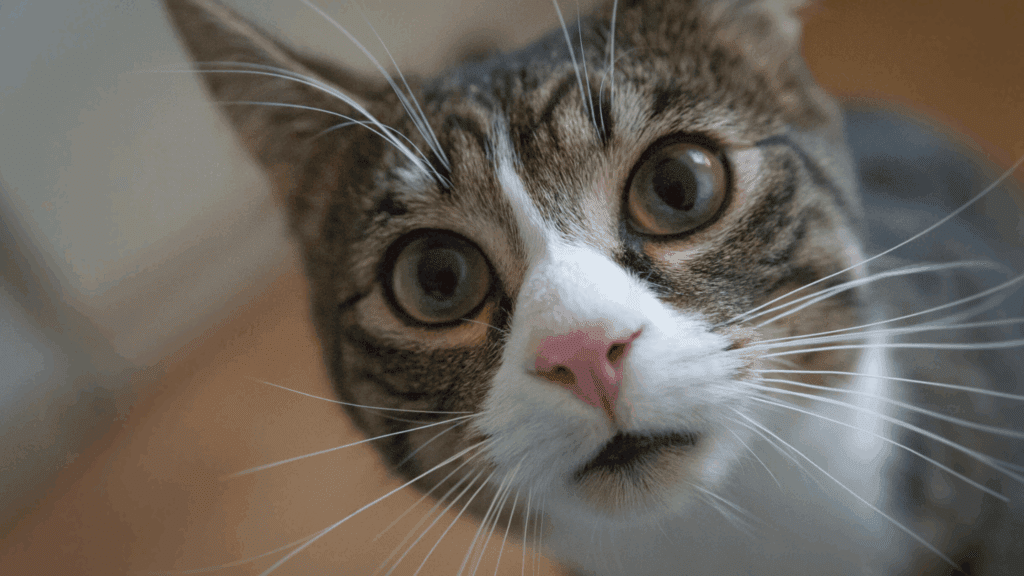
What Are Cat Whiskers?
Whiskers, also called vibrissae, are specialized tactile hairs thicker and stiffer than regular fur. Unlike ordinary hairs, whiskers are rooted three times deeper into the skin and surrounded by blood-filled sacs that amplify vibrations. This unique design makes them incredibly responsive to environmental changes.
Cats typically have whiskers on their muzzle, above the eyes, on the chin, and even on the back of their front legs. Each location plays a role in sensing touch and movement. Unlike human hair, whiskers are not cosmetic — they’re essential to feline survival.
The Science Behind Whiskers (Vibrissae)
Whiskers are linked directly to a part of the cat’s brain called the somatosensory cortex, the same area that processes touch. Every whisker acts like a tiny antenna, picking up signals and sending them straight to the nervous system.
Interestingly, whiskers don’t just respond to touch but also detect minute shifts in air currents, which can warn cats about nearby movement or obstacles. Think of whiskers as Wi-Fi for the senses — invisible signals are picked up instantly and translated into actionable information.
Why Do Cats Have Whiskers? – The Core Function
At the heart of the question — why do cats have whiskers — lies the reality that whiskers are multifunctional. They help cats:
- Measure space before entering tight areas.
- Detect prey movement during hunting.
- Communicate mood and emotions.
- Stay balanced while climbing or jumping.
- Avoid bumping into objects in low light.
Without whiskers, cats lose a critical part of their sensory world, leaving them disoriented and vulnerable.
Whiskers as Sensory Tools
Whiskers are more than static hairs; they’re dynamic sensors. Even the slightest brush against them sends a flood of information to the cat’s brain. For example, when a cat is sitting by a window, its whiskers can sense the direction of wind or detect the flutter of an insect’s wings before it’s even visible.
This makes whiskers an evolutionary advantage, giving cats heightened awareness that ensures survival in the wild and confidence indoors.
Helping Cats Judge Space and Distance
Ever wondered how cats manage to leap gracefully from one surface to another without miscalculating? Their whiskers are key players in this. Since the whisker length usually equals the width of a cat’s body, they act like natural measuring sticks.
Before squeezing into a box or hole, whiskers sweep forward to test whether the opening is large enough. This prevents cats from getting trapped and allows them to move with seemingly magical precision.
Whiskers Aid in Hunting
Cats are ambush predators, relying heavily on stealth and accuracy. Whiskers enhance their ability to detect prey movements in near darkness. When a cat captures a mouse, whiskers around the muzzle help sense even the faintest twitch, allowing the cat to deliver a precise killing bite.
This hunting aid is why feral and wild cats are equally dependent on whiskers as domestic cats, proving their evolutionary importance.
The Role of Whiskers in Communication
Cats may not speak our language, but their whiskers often reveal what they’re feeling. Forward-pointing whiskers usually mean the cat is curious, alert, or in hunting mode. Flattened whiskers, on the other hand, often signal stress or fear.
Other cats can interpret these signals instinctively, making whiskers an important tool in feline-to-feline communication. Pet owners who learn to “read whiskers” often have an easier time understanding their cat’s moods.
Do Whiskers Help Cats See in the Dark?
Whiskers aren’t night-vision goggles, but they do amplify a cat’s natural ability to navigate in low light. Since whiskers can sense air movement around objects, cats can essentially “feel” their surroundings even when it’s pitch black.
This sensory map supports their excellent eyesight in dim light, giving them an edge over many other animals when hunting or exploring at night.
Whisker Fatigue: When Too Much Stimulus Hurts
While whiskers are powerful, overstimulation can cause whisker fatigue. This condition happens when whiskers are constantly brushed or pressed against, such as with deep food bowls or crowded spaces. Symptoms include:
- Reluctance to eat from a particular bowl
- Pawing at food before eating
- General irritability or restlessness
To prevent this, vets recommend using shallow, wide bowls designed to be whisker-friendly.
Do All Cats Have the Same Number of Whiskers?
No, the number of whiskers varies slightly by breed and genetics. However, most cats share a common pattern — whiskers arranged in four rows of 12 on either side of the muzzle. Larger breeds, like Maine Coons, often have longer and thicker whiskers compared to smaller cats.
This variation ensures each cat has whiskers adapted to its unique body size and hunting style.

How Many Whiskers Does a Cat Have?
On average, cats have 24 whiskers on the muzzle, but that’s not the whole story. Additional whiskers are found above the eyes, on the chin, and even on the back of the legs. These leg whiskers are especially useful when climbing or holding prey.
The symmetrical placement ensures balance, giving cats equal input from both sides of their face.
Can Cats Live Without Whiskers?
Cats can survive without whiskers, but life becomes extremely difficult for them. Without whiskers, cats lose their spatial awareness and hunting precision. Trimming whiskers is painful and disorienting because it cuts off a crucial sensory system.
Veterinary experts strongly advise against trimming whiskers. If one breaks or falls out naturally, it will regrow, but cutting them intentionally is harmful.
Whiskers vs. Human Hair: What’s Different?
At a glance, whiskers may resemble thick strands of hair, but they’re structurally different. Human hair is primarily cosmetic, with follicles that don’t connect to deep nerve networks. Whiskers, however, are neuro-sensory instruments.
They don’t continuously grow like human hair, and they don’t require grooming. While losing a few whiskers isn’t harmful, altering them disrupts the cat’s ability to function normally.
Protecting Your Cat’s Whiskers
To keep your cat’s whiskers safe and healthy, here are some best practices:
- Always use shallow food and water dishes.
- Avoid trimming or cutting whiskers.
- Don’t let children tug or play with whiskers.
- Provide your cat with spacious, uncluttered areas to prevent overstimulation.
By respecting their whiskers, you support your cat’s comfort, confidence, and wellbeing.
Fun Facts About Cat Whiskers
- Some cats’ whiskers change color with age, turning white or gray.
- Whiskers above the eyes protect cats from dust and injury.
- Cats can deliberately move their whiskers forward when investigating something.
- Whiskers are shed naturally, just like fur, but they grow back.
- The longest recorded cat whisker measured 7.5 inches on a Maine Coon cat (source).
Conclusion
Whiskers are far from decorative features — they’re survival tools finely tuned by evolution. From sensing vibrations to helping cats communicate their emotions, whiskers give felines the ability to live gracefully, hunt effectively, and explore fearlessly.
So the next time you notice your cat twitching its whiskers, remember you’re witnessing a sophisticated sensory system in action — one that sets cats apart as some of nature’s most remarkable animals.
FAQs
1. Why do cats have whiskers that are so long?
Whisker length typically equals body width, acting as a natural measuring tool to help cats judge space.
2. Do whiskers grow back if cut?
Yes, whiskers regrow naturally, but trimming them can leave your cat stressed and disoriented in the meantime.
3. Can whiskers show a cat’s mood?
Definitely. Forward whiskers show curiosity or alertness, while pulled-back whiskers usually signal fear or defensiveness.
4. Do kittens have whiskers at birth?
Yes, kittens are born with whiskers to help them navigate and find their mother even before their eyes open.
5. How sensitive are whiskers compared to human senses?
Whiskers are as sensitive as human fingertips, capable of detecting tiny changes in air movement and pressure.
